
The Political Divide
Democratic Senate Seats Held in 10 Most Rural States
2009 vs. 2025
In 2009, Democrats reached a peak in the Senate holding 60 seats, including in states such as North Dakota, South Dakota and Missouri — states with heavy rural populations that are completely out of reach for Democratic candidates today.
The pool of potential voters available to candidates with a “D” next to their name has been shrinking year over year. If we do not reverse this trend, Democrats will be in a permanent minority. Nowhere have these changes been more prominent than with rural voters.
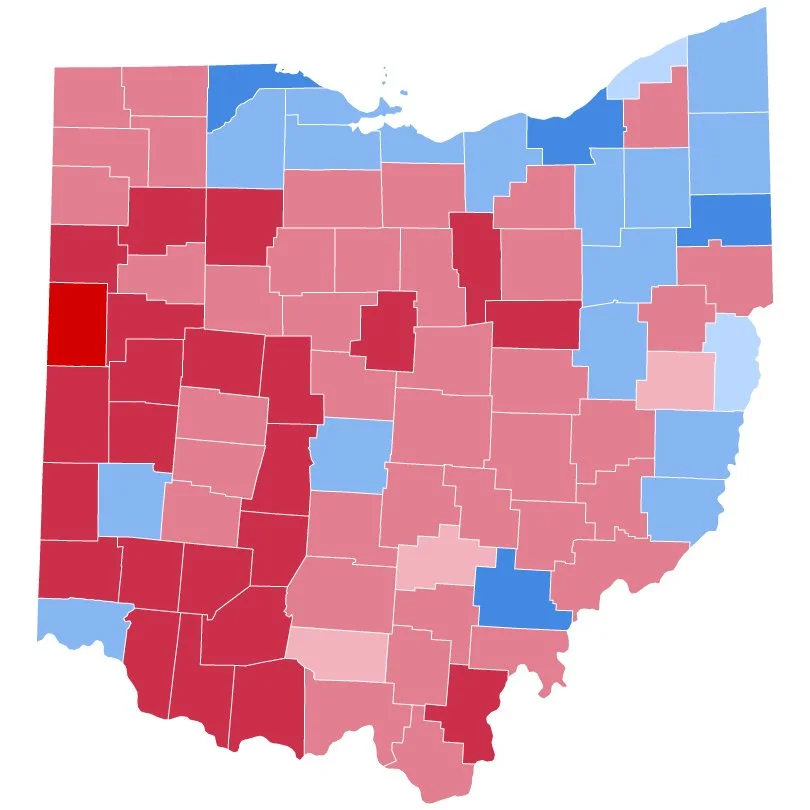
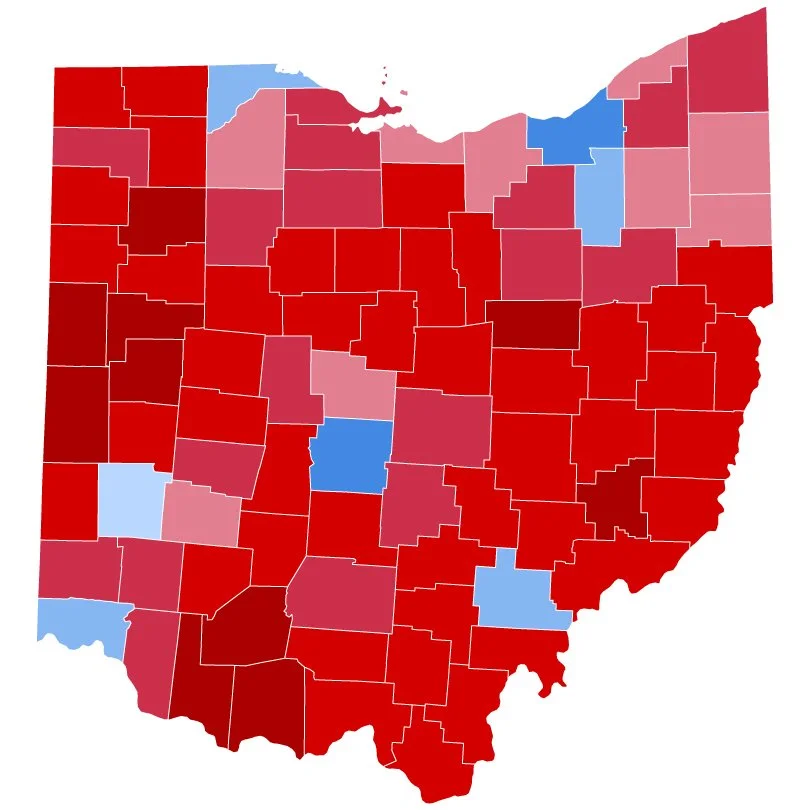
Take for example Ohio — a once-purple state now widely considered a Republican stronghold.
In 2008, Barack Obama won the state 51% to 46%, winning 22 counties, and in 2024, Kamala Harris lost the state 55% to 43%, winning only seven counties. In 2008, John McCain only won one county with more than 70% of the vote, and in 2024, Donald Trump won more than 70% of the vote in 53 counties.
Ohio Presidential election results by county.
2008
VS.
2024
We’re seeing the same dynamics play out in other key battlegrounds, an alarming sign for Democrats’ ability to remain competitive nationally. Take this analysis from The Washington Post showing that rural counties moved so far to the right, Republicans have made significant net gains despite the shrinking populations in rural communities.¹
The biggest divide is no longer North vs. South it’s Rural vs. Urban
This analysis from political scientist David Hopkins shows an ever more drastic change over the last 40 years:³
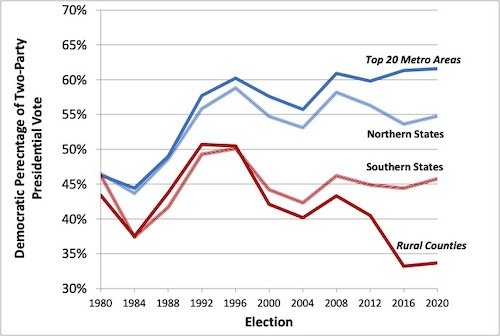
Source: Honest Graft, David A Hopkins